
How Safe are Text Messages?
Use Protonmail instead….

We keep saying - use Protonmail.com
STOP using text messages. Stop using gmail, yahoo, hotmail, etc. They are not secure and lack privacy features.
/
Yes, in most cases police can obtain text/call metadata after 6 months (and often much longer) under federal law that applies nationwide, including in most states.
Key Legal Rules
The federal Stored Communications Act (SCA, 18 U.S.C. § 2703) sets the baseline rules that govern how law enforcement can compel phone carriers or service providers to turn over records. These rules apply across the United States:
Metadata (non-content records) — such as who texted or called whom, dates/times, duration, and basic subscriber information — does not have a 180-day (roughly 6-month) cutoff like message content does.
Police can generally obtain these records with a court order under § 2703(d). This requires only “specific and articulable facts” showing the records are relevant and material to an ongoing criminal investigation (a lower standard than probable cause). Basic subscriber details can sometimes be obtained with an administrative or grand jury subpoena.Message content (the actual words) is treated differently: a full search warrant based on probable cause is required for content stored 180 days or less. For older content the statute technically allows a lower standard, but courts and DOJ policy have largely made warrants the practical requirement regardless of age.
There is no automatic expiration that prevents access to metadata simply because 6 months have passed.Impact of Carpenter v. United States (2018) and Related CasesThe Supreme Court held that acquiring longer-term historical cell-site location information (CSLI) — records showing which cell towers a phone connected to — is a Fourth Amendment search that generally requires a warrant supported by probable cause. This applies even though CSLI is a form of metadata held by a third-party carrier. Traditional call-detail or text-message metadata (numbers dialed/texted and timestamps, without detailed location tracking) is still often obtainable under the SCA’s lower court-order standard in many jurisdictions. However, some courts have applied heightened scrutiny, and law enforcement frequently seeks warrants for any potentially sensitive records to avoid later challenges. Recent cases have continued to emphasize privacy interests in certain location-related data. State Variations and “Most States”Federal SCA rules set the floor. Many states follow them closely. A number of states have enacted stronger electronic privacy laws that require warrants for stored communications content (eliminating the old 180-day distinction) or for certain types of metadata. These state laws generally increase protections rather than reduce them. In practice, across most states:
Metadata records that carriers still hold can be compelled after 6 months (or years) via the appropriate legal process (court order or warrant).
Carriers typically retain text/call metadata for 1–7 years (e.g., roughly 1 year for Verizon on a rolling basis, longer for AT&T and others), so the records often still exist.
Practical Limits
The records must still exist with the carrier (retention policies vary and can change).
Law enforcement can issue a preservation request under § 2703(f) to freeze records for 90 days (extendable) while obtaining a court order or warrant.
Bottom line: After 6 months, police in most states can obtain available metadata through a court order (or warrant for more sensitive location data), provided the carrier has retained it. This is distinct from message content, which faces higher barriers. Rules can vary slightly by jurisdiction and the exact type of metadata sought, so specific cases depend on local practice and the facts.
/
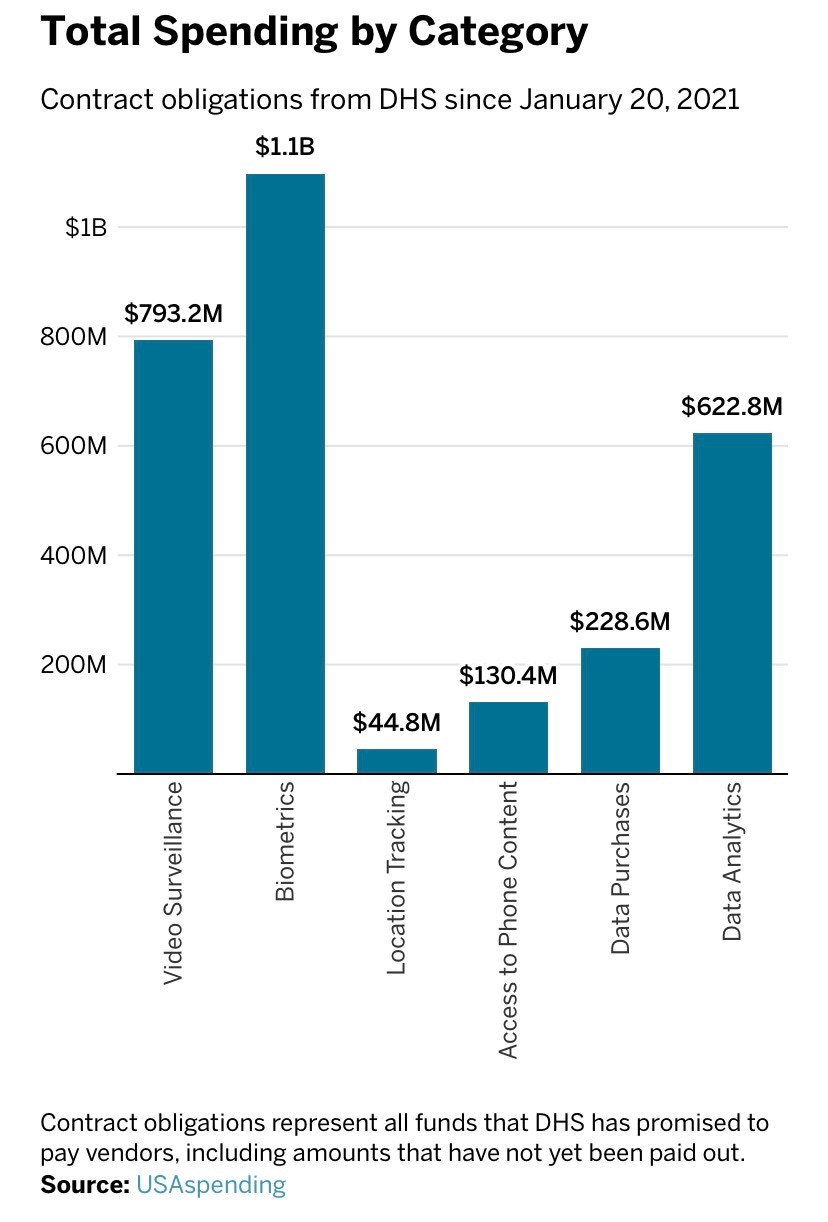
DHS’s Domestic Surveillance, Data Collection, and Analytics Tools
For years, the Department of Homeland Security (DHS) has purchased tools to collect and analyze US civilians. Backed by a staggering budget increase, DHS’s technology has only grown more expansive
./
Here's another issue we often have.. for example, someone else is also viewing everything i do on my phone no matter security updates or whatever.
I can't replace my phone so i'm dealing with it.
Their phone acts like a part of my phone, but is still another phone & was seen by an app I got into. It is an i-phone, but within seconds of me seeing it, its name actually changed before my eyes to 'generic android'. Everything we type, every page we go to is actually being monitored in real time. In fact, they erased Outlook from my phone & I didn't even notice until I needed it, today. My guess is because I would've been told of changes to accounts thru email.
Yes, yes yes sign up with protonmail but do it from somewhere where no one can get your password as you type it
They'll still find a way to get into it, but if you take it with you each time as you come & go from your car, then it'll help avoid erased or changed footage